The phone is the entire storefront
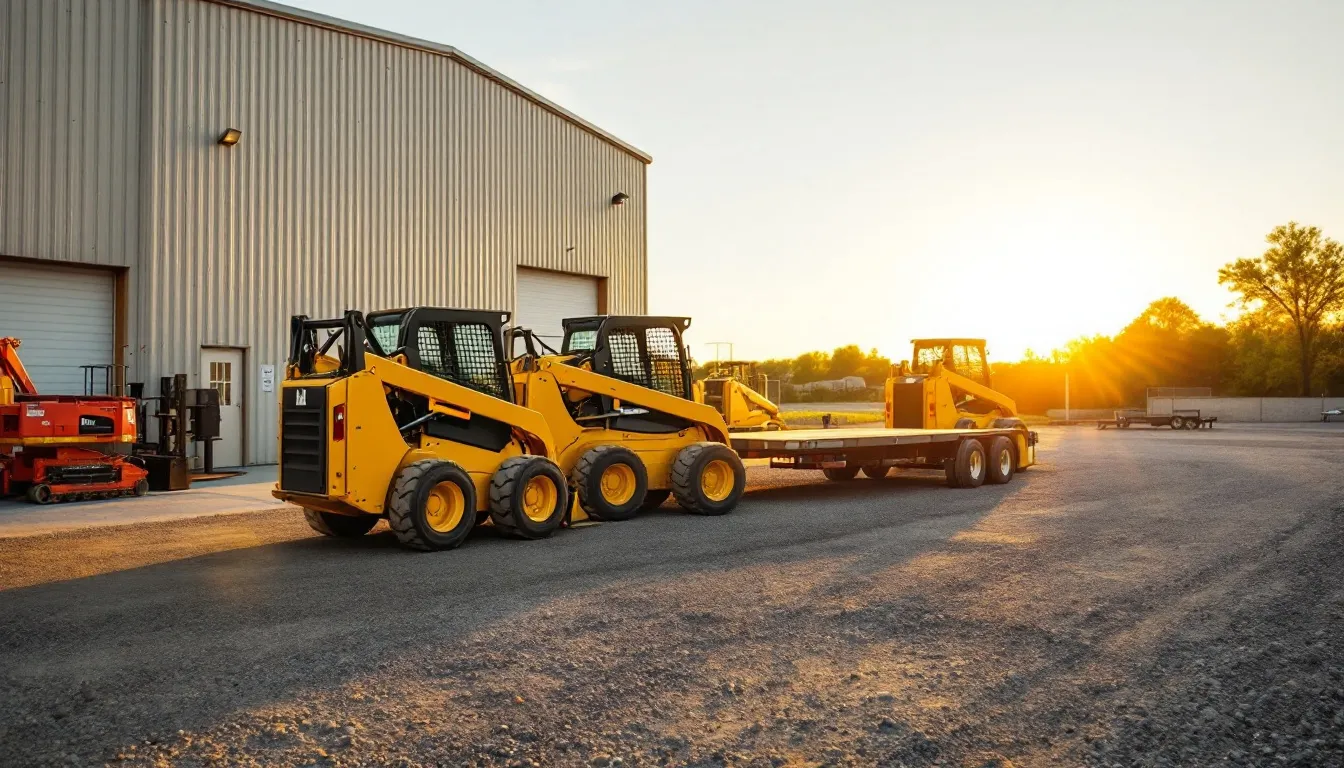
A rental yard is not really a retail business with a counter. It is a phone business with a gravel lot attached.
Almost nobody drives to a small rental yard to browse. They call. They call because they are standing on a job site at seven in the morning with a crew already on the clock, and they need to know one thing before anything else in their day can proceed: do you have the machine, and can you get it to them today. Price matters, but price is the second question. The first question is availability, and the company that answers it cleanly wins a disproportionate share of the work.
As of September 2026, that ordering is the single most useful operational fact about the trade, and it explains why the most common revenue leak in a small yard is not underpricing or utilization — it is the sentence let me check the yard and call you back. That sentence is where rentals die. The caller hangs up, dials the next company on the list, and by the time you have walked the rows and confirmed the trencher is on the lot, they have already reserved one somewhere else. This guide walks the full operations stack for a small independent yard renting skid steers, boom and scissor lifts, trenchers, compaction equipment, generators, and small tools. Everything maps to the Run with Jarvis platform, which puts answering, scheduling, dispatch, billing, and follow-up under one subscription instead of five disconnected tools.
The structural problem is worth naming plainly. In most service trades the office and the field are different people. In a small rental yard they are the same person. The owner or the yard manager is doing a walkaround on a returning lift when the phone rings, and both hands are busy. The call volume clusters at exactly the hours the yard is most physically occupied — first thing in the morning when contractors are mobilizing, and late afternoon when they are arranging tomorrow. That is not a staffing failure you can discipline your way out of. It is a conflict built into the shape of the business.
The specific places a rental yard loses money on the phone
Be precise about the leaks, because rental leaks do not look like plumbing or HVAC leaks.
The availability call that goes to voicemail during the morning rush. The contractor calling at 6:50 a.m. is not going to leave a message. They have a crew standing around and they will call four companies in eight minutes. Every unanswered ring at that hour is a full rental period lost, and if the customer is a general contractor who rents monthly, the loss compounds far past the one machine.
The callback that arrives after the decision. Even when you do call back, forty minutes later, you are calling into a decision that has already been made. The window in which an availability answer is worth anything is measured in minutes.
The rental booked without the fit questions. Somebody reserves a 74-inch skid steer over the phone, nobody asks about the gate, and the gate is 60 inches. The delivery truck arrives, cannot get the machine into the yard, and the driver spends an hour on the phone trying to reach a superintendent. That is a wasted delivery run, a wasted return trip, and a customer who now associates your name with a bad morning. The same failure happens with electric scissor lifts on sites with no charging power, with lifts that cannot clear an overhead line, and with machine classes the crew has nobody certified to operate.
The delivery run that was never actually scheduled. Delivery and pickup are jobs. They consume a driver, a truck, a trailer, and a real block of time including loading, drive time, unloading, and a walkaround. When they live as scribbled notes rather than scheduled work with drive time attached, the day overcommits, and the third delivery of the morning turns into a 4 p.m. delivery with an angry phone call attached.
The pickup that nobody scheduled at all. A machine sitting on a completed job site is not earning and is not available to rent to the next caller. Pickups are the quietly expensive miss because nobody complains about them until the machine is needed.
The fuel, hours, and damage argument at return. This is the dispute that poisons otherwise good customer relationships. The machine comes back with a cracked door, a bent bucket edge, or a tank at a quarter, and there is no shared record of what went out. Now it is your word against a contractor's, and you either eat the cost or damage the relationship over a $180 charge.
The seasonal whipsaw. Spring and early summer produce phone volume the yard cannot physically absorb; winter produces days where the phone barely rings. Staffing to the peak is unaffordable and staffing to the trough means missing the season that pays for the year. The dynamics of that swing are worked through in the guide to seasonal call volume.
The 6 p.m. breakdown call with your machine on someone's site. A hydraulic line lets go on a lift at a job site at dusk. The customer needs to know whether you are bringing a replacement, whether they are being charged for the down hours, and whether the machine is safe to leave. If that call reaches a voicemail box, you find out about it tomorrow — after the customer has spent a night deciding you were a mistake.
Each leak has a layer in the stack that closes it.
Layer 1: Answering that treats availability as the first question
The anchor is KeyBot, the AI phone agent. It answers on the first ring, in English or Spanish, at 6:40 a.m. and at 6:40 p.m. and on Saturday, and it holds many conversations at once rather than queuing them behind each other. That concurrency matters more in rental than almost anywhere else, because your calls do not arrive evenly. They arrive in a wave at the exact moment the yard is loading.
The design point specific to this trade is that the intake must be built around availability rather than around a message. A generic answering service takes a name and a number and the words needs a skid steer, which is worth almost nothing — it does not tell you whether the machine is available, and it certainly does not tell the caller. A rental intake asks for the machine class and size, the start date, the expected duration, and the job site, and then does something with the answers: confirms the reservation against the live calendar, or captures a complete, actionable hold that a human turns around in minutes rather than hours.
The bilingual coverage is not a nicety here either. On many job sites the person sent to arrange the machine is a foreman or a crew lead, not the estimator, and requiring them to find an English speaker before they can rent from you simply moves the rental to a competitor.
For a plain-language walkthrough of how an automated intake actually completes a booking rather than taking a message, this explanation of AI appointment booking covers the mechanics.
Layer 2: The fit questions that decide whether the machine can even work
This is the layer that separates a rental intake from a generic script, and it is where the money quietly is.
Before a machine leaves the lot, the record needs answers to a short and specific list. What is the job site address, and is it a residential lot, a commercial site, or a road job? How does the equipment get in — gate width, driveway slope, soft ground, overhead obstructions, low branches, power lines? Is there power on site, and of what kind, if the customer is renting an electric unit that needs charging overnight? What surface is it working on, since a machine that will run on finished concrete needs different tires or tracks than one working in mud? Does the crew have somebody certified to operate this class of equipment, and do they know that is their responsibility rather than yours? And, decisively, are they picking it up themselves with their own trailer and hitch rating, or do they need delivery?
None of those questions are exotic. Every experienced yard hand asks them by instinct. The problem is that they get asked inconsistently — thoroughly at 10 a.m. when there is time and barely at all at 6:45 a.m. when there is not — and the calls that skip them are precisely the calls most likely to produce a failed delivery. An automated intake asks the same list in the same order on call number two hundred as on call number one, at every hour, and it writes the answers into the record where the driver will actually see them.
There is a second-order benefit. When the fit questions surface a mismatch during the call rather than at the gate, you get to sell the right machine instead of losing the rental. The 60-inch gate does not mean no rental. It means a compact track loader instead of the larger skid steer, which is a conversation you can only have if somebody asked about the gate.
Layer 3: Delivery and pickup as scheduled work with drive time
Treat every delivery and every pickup as a job on a calendar, with a real duration that includes loading, transit, unloading, the walkaround, and the paperwork.
GetTimePad holds the actual availability so the reservation and the delivery window are set on the same call rather than negotiated afterward. GPS tracking and route optimization sequence the day's runs geographically instead of in the order the calls came in, which in a delivery-heavy morning is worth an entire extra run. Automatic ETA and arrival texts go to the site contact, so the superintendent knows the lift is arriving between nine and ten and stops calling the office to ask.
Those where is my delivery calls are one of the largest categories of inbound volume in a rental yard and one of the most completely eliminable. They generate no revenue, they consume the same phone capacity your next availability call needs, and they arrive at the exact hour you are least able to absorb them.
Pickups deserve their own scheduling discipline. A rental does not end when the contractor is done with the machine. It ends when the machine is back on your lot and available to rent again. Scheduling the pickup at the same time the rental is written, then confirming it as the end date approaches, is the difference between a machine that turns and a machine that sits in a mud lot for eleven days after the job wrapped.
Layer 4: Deposits and payment at reservation, not at return
Rental is one of the few trades where you hand over an asset worth tens of thousands of dollars on the strength of a phone call. Collecting money at reservation is not aggressive, it is basic.
The stack supports invoicing with three payment providers and payment links a customer can pay from their phone before the truck loads. Taking the deposit and the first period at reservation does two things at once: it protects the asset, and it filters. A caller who will not put a card behind a reservation was frequently not going to show up anyway, and finding that out before you route a delivery truck is worth the friction. The general case for sending a link rather than chasing payment is laid out in getting paid faster with payment links, and the rental adjustment is simply that the link goes out before the machine does rather than after the work is done.
QuickBooks bidirectional sync closes the back end so that deposits, rental periods, damage charges, and fuel charges do not have to be re-keyed at month end.
Layer 5: The return, and the documentation that settles it
Every rental company has a version of the same argument. The machine comes back with damage or short on fuel, you charge for it, and the customer says it was already like that.
You will not win that argument with a better memory. You win it with a record that existed before the dispute. Photos attached to the out event and the in event. Hour meter and fuel level recorded at both ends against the specific machine and the specific rental. Driver and yard notes in the same system as the reservation, not in a text thread on somebody's personal phone. The signed terms attached to the customer record where anyone can find them.
The point is not that documentation makes disputes disappear. It is that a documented charge produces a short conversation and an undocumented one produces a long one, and the long ones cost you either the money or the customer. Chargeback defense is included in the Core feature set, which is worth noting because rental damage and fuel charges are disputed at a materially higher rate than ordinary service invoices — the charge lands weeks after the machine went back, when the urgency that justified it has faded and somebody in an office is reviewing a statement.
The same equipment record does a second job. Machines accumulate history: what broke, when, at what hour reading, after which customer. That history is what tells you a specific lift has become a liability, when a fleet unit should be cycled out, and which customers return equipment in consistently poor condition. The logic is close to how a service business tracks parts and consumables across trucks, covered in truck stock and parts inventory — the yard version is simply that the asset itself is the inventory.
Layer 6: The seasonal swing and what it does to the phone
Rental demand is violently seasonal in most markets, and the swing hits the phone before it hits the yard.
The peak weeks produce more calls in a day than the office can physically handle, and the calls that go unanswered in those weeks are the most valuable calls of the year — peak-season contractors rent longer and at better rates. The trough produces days where a dedicated phone person has nothing to do. Hiring to the peak is unaffordable; hiring to the trough guarantees you miss the season.
Automated answering resolves that by decoupling capacity from headcount. The AI answers ten simultaneous calls in April and two in January, and the cost tracks usage rather than a salary. That is the real economic argument for automation in a seasonal trade, and it is worked through in more depth in the seasonal call volume guide.
The off-season has its own use for the platform. Quiet months are when the customer list should be worked: the platform's AI outbound follow-up calls can contact your own past customers about the coming season, follow up on quotes that stalled, and chase unpaid invoices from the last busy stretch. That is follow-up on people who already know you, not cold prospecting.
Layer 7: The after-hours breakdown call
At 6 p.m. a customer calls because your machine is down on their site.
That call has to be answered, and it has to be triaged, because there are two very different versions of it. One is a machine that has genuinely failed and needs a swap or a field repair. The other is an operator who has not found the safety interlock, tripped a breaker, or run the tank dry — which resolves over the phone if somebody picks up.
Either way the record that matters is the same: which machine, which serial or unit number, which site, what happened, whether it is safe where it sits, and whether the customer expects the down hours credited. A 24/7 intake captures that and routes it to whoever is on call with the rental record attached, instead of dropping it into a voicemail box that gets opened tomorrow morning. The broader case for treating after-hours as a coverage problem rather than an inconvenience is made in the all-in-one versus point solutions comparison, which is also the right frame for deciding whether to solve answering, scheduling, and billing with one system or three.
What each call type costs when nobody answers
The table below is the shape of the problem in one view. Treat the cost column as illustrative and replace it with your own average rental value and delivery cost.
| Call type | What the caller needs in the first 30 seconds | What it costs when nobody answers |
|---|---|---|
| Availability | A yes or no on the machine and the dates, not a callback promise | The full rental period, plus the follow-on work from a contractor who now has another yard's number saved |
| Rate quote | A number for the day, week, and month, plus what delivery adds | A price-shopping caller who never returns, since the quote arrived after they booked elsewhere |
| Delivery scheduling | A confirmed window and confirmation the site access details are recorded | A failed or rescheduled delivery run, plus the driver hours consumed by it |
| Breakdown on site | Acknowledgement, a triage question, and a plan for tonight or first thing | Down hours you end up crediting anyway, and a customer who does not renew |
| Late return or extension | Whether the machine can stay out and what the extension costs | Either an unbilled extension or a machine promised to the next customer and not there |
Working the numbers with your own assumptions
Do not accept an ROI claim on faith. Build it from your own rates.
Assume a small yard writes 90 rentals a month at a $540 average rental value, which is $48,600 in monthly revenue. Assume the phone rings 220 times a month, and that between loading, deliveries, walkarounds, and evenings, 45 of those calls go unanswered or reach voicemail. Treat these figures as an illustration to replace with your own.
Now be deliberately conservative. Of those 45 missed calls, assume only 6 would have become rentals. At $540 each that is $3,240 of recovered revenue a month. Core at $500, plus say 250 overage minutes at $0.45 — which is $112.50 — comes to $612.50. The recovered revenue is more than five times the cost, before counting anything the delivery scheduling, deposit collection, pickup, or review layers contribute.
The minute math is worth understanding separately. Core includes 500 AI call minutes. If a typical rental intake runs three minutes, that is roughly 165 calls inside the base plan, with additional minutes at $0.45. A yard fielding 220 calls a month will run over, and in a peak month it will run well over. Pro's 1,000 minutes at a $0.40 overage becomes the structurally cheaper choice somewhere above roughly 1,100 minutes of monthly usage — but the better reason to move to Pro is that it is where call tracking and attribution start, which matters if you are buying ads against machine-class searches. Current figures are on the pricing page.
A realistic rollout order
Start with answering and intake, because that is where the recoverable money is and because it changes the yard's day immediately. The phone stops interrupting the loading. Give it two or three weeks and look at what got captured at 6:45 a.m. that would previously have been a missed ring.
Then wire delivery and pickup scheduling with drive time, GPS routing, and arrival texts. That is where the where is my delivery calls disappear and where the day stops overcommitting. Then move deposits and payment to reservation time with payment links, and connect QuickBooks so the month-end is not a reconstruction. Then tighten the return documentation — photos, hours, fuel, notes against the machine and the rental — since that is the layer that pays off slowly and then all at once during your first serious damage dispute.
Only after that, if you advertise, consider Pro for call tracking and attribution or Elite for campaign management and the assistant layer. Attribution on a yard that is still missing morning calls just buys a precise measurement of a leak you already know about.
The short version
An equipment rental yard loses money in seven specific places: the availability call missed during the morning rush, the callback that arrives after the decision, the rental booked without the fit questions, the delivery run scheduled without drive time, the pickup nobody scheduled, the return dispute with no documentation behind it, and the after-hours breakdown that reached a voicemail box.
Each has a layer. First-ring concurrent answering closes the first two. A structured fit intake — site access, power, surface, certification, delivery or pickup — closes the third. Delivery and pickup as scheduled work with routing and arrival texts closes the fourth and fifth. Photos, hours, and fuel recorded at both ends closes the sixth. Round-the-clock intake with the rental record attached closes the seventh.
The thread running through all of it is that a rental customer is standing on a job site with a crew on the clock, and the first company that gives them a real answer gets the machine out the gate. Everything else in the stack exists to make sure that answer is one you can keep.
If you want to see it running against your own call volume and average rental value, get in touch or compare plan details on the pricing page.