The customer is losing revenue by the hour
Most trades sell repair. Commercial kitchen equipment repair sells the restaurant's ability to open tonight.
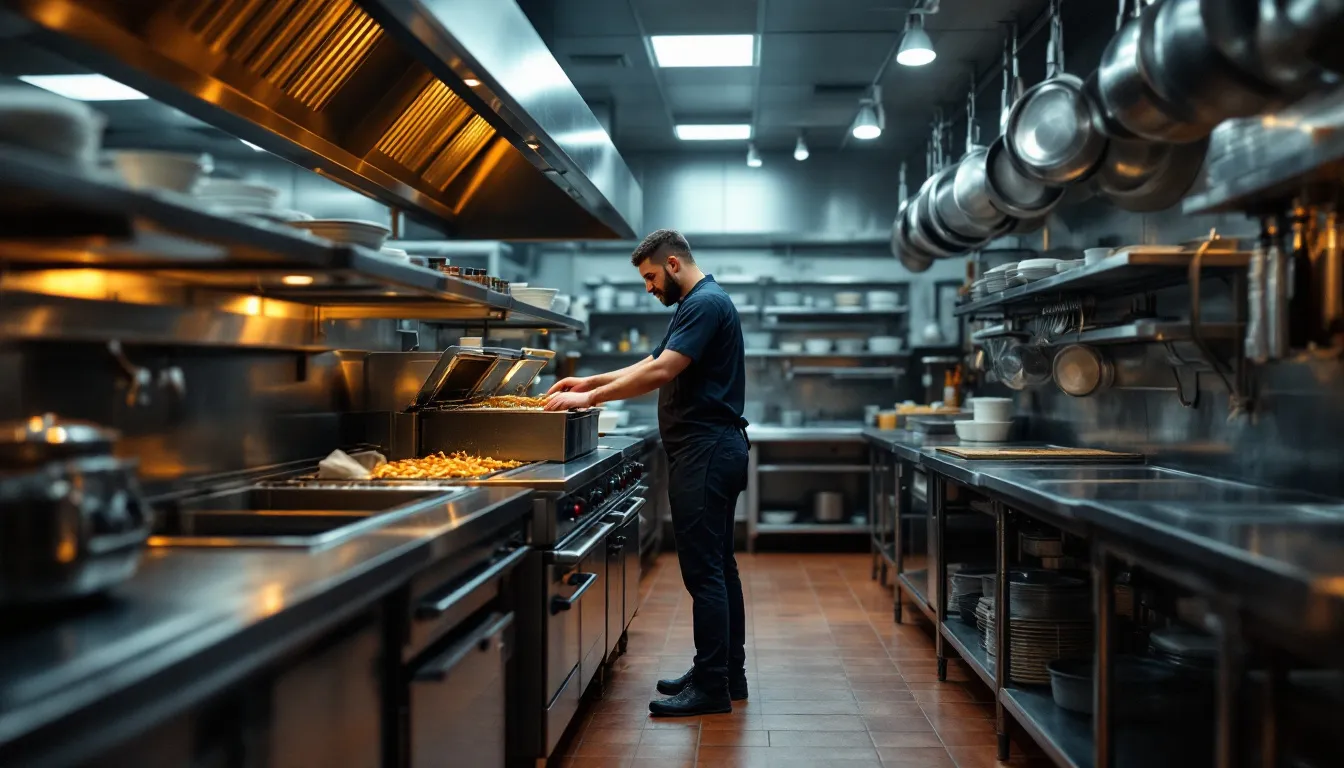
When a fryer goes down at four in the afternoon, the operator is not weighing vendors. They are looking at a prep list, a reservation book, and a menu that is about to have four items pulled from it. When an ice machine quits on a Saturday in July, the bar has a few hours of bagged ice and then a problem. When the walk-in warms overnight or the dishmachine stops sanitizing, the question is not what the repair costs — it is whether the health inspector's standard can be met at open. Every hour of downtime is measurable lost revenue on the customer's side, and they know the number.
As of September 2026, that is the defining operational fact of the trade, and it explains the shape of the phone. Calls do not arrive during business hours because kitchens do not fail during business hours in any convenient sense. They arrive at 6:30 in the morning when a manager unlocks and finds the range dead, at 6:30 in the evening in the middle of service, and on weekends when nobody in a normal office is answering. This guide walks the full operations stack for a company servicing fryers, ranges, ovens, ice machines, walk-ins, and dishmachines: answering, emergency intake, parts, dispatch, chain work orders, planned maintenance, after-hours pricing, and the warranty determination. Everything maps to the Run with Jarvis platform, which puts those systems under a single subscription rather than a stack of disconnected tools.
If your book also carries refrigeration racks and walk-in systems, a good deal of the answering and dispatch logic overlaps with the commercial refrigeration operations stack. The differences that matter here are parts: kitchen cooking and warewashing equipment is a wider catalog with more manufacturers, more model revisions, and more serial-specific components than a refrigeration rack, which makes the parts question the true constraint on everything downstream.
The specific ways money leaks out of a kitchen equipment company
Be precise about the leaks before reaching for a fix.
The 6:30 a.m. call that hits a voicemail box. The manager who unlocked and found the ovens cold is calling three service companies before their crew arrives. Whoever answers gets the job, and often the account behind it, because that operator has just learned in the most memorable possible way who picks up. A message returned at nine is a record of work somebody else did.
The mid-service emergency where nobody triaged. A fryer down at 6:45 p.m. is not the same call as a fryer that is heating slowly. One needs a technician tonight at premium rates; the other needs a slot tomorrow morning. Both callers will say emergency. Without a consistent triage question, you either pay overtime for a job that could have waited or you deprioritize a kitchen that is genuinely stopped.
The truck rolled without the part. This is the trade's signature loss. A technician arrives, diagnoses a failed high-limit thermostat, and discovers the part is a serial-specific revision that is not on the van. Now there is a second visit — often unbillable, always margin-destroying, and, from the customer's point of view, a day and a half of downtime rather than two hours.
The chain work order that stalls in accounts payable. A regional facilities department issues a work order with a number, a not-to-exceed amount, and a required documentation format. The store manager who called cannot approve anything. If your intake captured a store name and a phone number but no work order number or approval limit, your invoice enters a corporate queue and ages for sixty days while somebody tries to match it to an authorization.
The after-hours charge nobody was told about. You send a technician at 8 p.m., you bill the after-hours rate, and three weeks later a franchise owner reviewing a statement disputes it. The work was legitimate and the rate was fair, and you are still going to spend an hour on the phone or write it off, because the customer first learned about it on the invoice.
The warranty call you ate. A two-year-old combi oven fails. The technician goes, diagnoses, and only then does anyone establish that the part is under manufacturer warranty, that the manufacturer requires an authorized servicer and a pre-authorization number, and that your visit does not qualify for reimbursement. That is a diagnostic visit you performed for free with a truck and a technician. The general shape of that problem, and how to track it, is covered in warranty callbacks and rework tracking.
The PM agreement that lapsed quietly. Planned maintenance is the schedulable revenue that makes the trade survivable, and it expires without anybody noticing, because emergencies always take priority over renewal lists.
Each leak has a layer in the stack that closes it.
Layer 1: Answering at the three hours that actually matter
The anchor is KeyBot, the AI phone agent. It answers on the first ring, in English or Spanish, at 6:30 a.m., at 6:45 p.m., and on Sunday. It holds many conversations simultaneously rather than queuing them, which matters more than it sounds — kitchen failures cluster. A summer heat event stresses every ice machine and condensing unit in a market on the same afternoon, and a single human answering one caller loses the other five.
Two properties are unusually valuable in this trade.
The first is that answering never degrades with the hour. A technician woken at 6 a.m. taking a call himself does intake half awake, and the record shows it. A general answering service asks generic questions from a script written for forty industries and captures a name, a number, and fryer broken, which tells your dispatcher nothing and your parts person less. An automated intake asks your questions, in your order, at 6:30 a.m. exactly as it does at 2 p.m.
The second is bilingual coverage, which in commercial kitchens is not optional. The person who discovers a failure is very often a line cook, a dishwasher, or a prep lead rather than the general manager. Requiring them to find an English speaker before they can report a dead range is a direct way to lose the call, and in a kitchen at 5 p.m. nobody has time to go find anyone.
The economics of covering nights and weekends without putting the burden on a person are worked through in the after-hours calls playbook.
Layer 2: Emergency intake, and why make, model and serial come before dispatch
This is the layer that determines whether the job takes one visit or two, and it is worth being pedantic about.
Every emergency intake needs four things beyond the caller's name and number.
Which location. Not the brand, the store — street address, store number, and whichever internal identifier a chain uses. A technician dispatched to a chain name with no store number is a technician making phone calls from a parking lot.
Which piece of equipment, identified specifically. Make, model, and serial number. The nameplate is on the equipment; the caller can read it with a phone flashlight in under a minute. This is the single highest-leverage question in the entire trade, because the serial determines the production revision and the revision determines which thermostat, igniter, control board, contactor, door gasket, or pump actually fits. Fryer not heating is not a parts request. This specific fryer, this serial, not heating, pilot lights but burner does not stay lit is.
What is actually happening, in the operator's words. Does it power on? Is there an error code on the display, and what does it say? Does it heat slowly or not at all? Is there water on the floor, a smell of gas, a tripped breaker, a reset button that has already been pressed twice? Gas smell in particular is a stop-everything answer that changes the instruction the caller receives immediately.
Whether the kitchen is open, closing, or opening. This is the triage line. A single fryer down in a four-fryer bank at a slow lunch is a tomorrow-morning job. A dishmachine that will not sanitize two hours before a Friday dinner service is a tonight job. A range that will not light at 6:15 a.m. before a breakfast restaurant opens is a right now job. Ask it explicitly and the schedule sorts itself; leave it to the caller's adjectives and everything is an emergency.
Capturing make, model, and serial during the call also lets somebody check stock before the technician leaves. That single sequencing change — parts check before dispatch rather than after diagnosis — is where the second visit disappears.
Layer 3: Parts as the real cycle-time constraint
Everything about this trade's schedule bends around parts availability.
The catalog is enormous. A single account can hold equipment from a dozen manufacturers across twenty years of production, and components are frequently revision-specific. Nobody stocks all of it. That means every job falls into one of three cases, and the operational goal is to move as many as possible into the first: the part is on the van, the part is at the shop, or the part has to be ordered.
The van case is a stocking decision informed by history. If your records show what you actually replaced across the last several hundred jobs, the top of that list is your van stock, and the tail is not. Without that history you stock by intuition and carry the wrong inventory expensively. The general method for deciding what rides on the truck is covered in truck stock and parts inventory.
The order case is a communication problem more than a logistics one. When a part is two days out, the customer needs to know that during the first visit, in writing, along with what the interim workaround is — pull the item from the menu, run three fryers instead of four, bag ice from the grocery store. The failure mode is a technician who says I will call you, then does not, while the operator sits with a dead machine and no information and begins calling other companies. A scheduled return visit placed on the calendar before the technician leaves the site, with an automatic confirmation text, converts that anxiety into a plan.
Per-location, per-unit equipment history compounds here. When the same store calls again, the record already knows the make, model and serial of every unit in that kitchen, what was replaced last spring, and which unit has failed three times. The caller does not have to read a nameplate they already read for you, and the technician leaves with the right part before anyone diagnoses anything.
Layer 4: Dispatch, ETAs, and the store that keeps calling back
Triage that ends in somebody will call you back throws away everything the answering layer earned.
GetTimePad holds real availability, so scheduled work — planned maintenance, non-urgent repairs, return visits for ordered parts — goes on the calendar during the first call rather than after a callback. For genuine emergencies, the intake routes to the on-call technician with the whole record attached: store, equipment with make and model and serial, symptom, whether the kitchen is open, the on-site contact and their mobile number, and access notes.
Access notes matter more in this trade than most, because a great deal of the work happens at closed restaurants. A technician standing outside a locked building at 6 a.m. waiting for a manager who is still driving in is a fully avoidable loss, and it is avoidable only if the intake asked who is opening and what the arrangement is.
Automatic ETA and arrival texts to the store contact remove the largest single category of pointless inbound volume in the trade. A manager who has just reported a dead fryer at 4 p.m. will call the office every fifteen minutes until somebody arrives, because they are watching their dinner service evaporate. Those callbacks generate no revenue and consume the same phone capacity your next emergency needs. A text with a window stops them.
Layer 5: The chain customer and the facilities work order
An independent restaurant and a fifty-store chain are two different businesses wearing the same uniform, and treating them identically is how invoices age.
With an independent, the person who calls is usually the person who can approve the repair and pay for it. With a chain, the person who calls is a store manager with no purchasing authority, and the actual customer is a facilities department that may be in another state. The work arrives, or should, as a work order with a number, a scope, a not-to-exceed dollar amount, and a set of documentation requirements — before and after photos, arrival and departure times, parts detail, a signature from a store employee.
Three things have to be systematic.
Capture the work order number and the not-to-exceed amount at intake, not after the work is finished. Chasing an authorization retroactively adds a week to your receivables for no reason at all, and sometimes it does not get resolved.
Make the overage rule explicit to the technician on site. When a repair is going to exceed the not-to-exceed number, the store manager cannot approve it, and a technician who assumes otherwise has just performed unbillable work. The record has to carry the limit to the field.
Bill in the format the facilities department requires, with the documentation attached, and send it immediately from the completed job rather than at the end of the week. Invoicing with three payment providers, payment links a facilities coordinator can route into their own system, and QuickBooks bidirectional sync keep month-end from becoming a reconstruction project.
Layer 6: Planned maintenance as the counterweight to break-fix
A pure break-fix kitchen equipment business is a business with no floor under it. Planned maintenance puts one there.
Fryer boil-outs, ice machine cleanings and sanitizing, hood and filter checks, gasket inspections, calibration, water filter changes and dishmachine chemical checks are all real, schedulable work that a restaurant genuinely benefits from — and it is work you can place around emergencies rather than around a customer's crisis. That fills the slow weeks, smooths technician utilization, and gives you a standing relationship with accounts that would otherwise only call you when they are already angry at their equipment.
Three parts need to be systematic. The visits belong on the same calendar as emergency work, not on a separate spreadsheet, because they are the flexible inventory you schedule around. Coverage has to live against the location and unit record, so that when a covered store calls, everyone knows immediately whether the visit is billable or included — getting that wrong in either direction is expensive. And renewals have to be worked before they lapse, which is the piece most companies never build. Agreements coming due are a list, and a list can be worked; the platform's AI outbound follow-up calls are built for exactly this shape of work, contacting your own existing customers about their own agreements rather than cold prospecting. The structure and pricing of these programs is covered in service agreement and membership plans.
Layer 7: After-hours pricing, quoted at the call
There is a simple rule that eliminates most billing disputes in this trade: the customer learns the after-hours rate before the technician is dispatched, not when the invoice arrives.
A restaurant owner in the middle of a Friday service will accept a premium rate to be running again tonight. They are comparing your number against a night of lost covers, and your number wins that comparison easily. The same owner, three weeks later, with the crisis long past and a statement in front of them, will dispute the identical charge — not because it was unfair but because it was a surprise.
So say it during the call, in plain terms: this is the after-hours rate, this is the trip charge, this is what a diagnostic covers, and here is the daytime alternative if the equipment can wait until morning. Put it in the confirmation text so there is a written artifact. Then let the customer choose. You will lose a small number of jobs to callers who decide to wait, which is the correct outcome, and you will avoid nearly all of the disputes.
Chargeback defense being part of the Core feature set matters here specifically, because premium after-hours work is exactly the charge that gets contested weeks later.
Layer 8: Warranty versus billable, determined before the truck moves
Manufacturer warranty on kitchen equipment is a genuine operating complication, not a footnote.
The determination has several moving parts: whether the unit is inside its warranty term, whether the failed component carries a longer parts warranty than the unit does, whether the manufacturer requires an authorized servicer, whether a pre-authorization number is needed before any work, whether labor is covered or only the part, and whether the failure is even a covered cause rather than damage, misuse, or lack of maintenance.
Getting that wrong in the customer's favor means you performed a diagnostic and a repair for free. Getting it wrong in your favor means you billed a customer for something a manufacturer would have covered, which is worse, because it costs you the account.
The practical fix is upstream. Ask at intake how old the unit is and whether the customer believes it is under warranty; capture the model and serial that will be needed to check; establish the manufacturer's requirements before dispatch rather than after diagnosis. Then hold the outcome on the job record, so that when the same unit fails again in eight months the warranty status is already known.
What each call scenario needs, and what happens when it is missed
Treat this as the operating checklist for your intake script.
| Call scenario | The intake detail that must be captured | Failure mode when it is not |
|---|---|---|
| Before open, kitchen opening in two hours | Store address, make, model and serial, whether the restaurant can open without it, who is unlocking | Technician arrives at a locked building or without the part, and the restaurant opens with a reduced menu |
| Mid-service emergency | Which equipment, whether the kitchen is currently running, error code or symptom, gas or water present | Overtime paid for a job that could have waited, or a genuinely stopped kitchen deprioritized behind it |
| Scheduled preventive maintenance | Which units are covered by the agreement, last visit date, site access and preferred window | Visit skipped in a busy month and never made up, or covered work invoiced as billable |
| Chain or facilities work order | Work order number, not-to-exceed amount, required documentation and photo format | Invoice ages sixty days in accounts payable, or the overage is performed and never approved |
| Suspected warranty claim | Unit age, model and serial, manufacturer authorization requirement, whether labor is covered | A diagnostic visit performed for free, or a customer billed for covered work and lost |
Working the numbers with your own assumptions
Build the case from your own ticket rather than accepting a claim.
Assume a kitchen equipment company completes 55 service calls a month at a $470 average ticket, which is $25,850 in monthly revenue. Assume the phone rings 165 times a month and that, between jobs, early mornings, evenings, and weekends, 32 of those calls go unanswered or reach a message service that produces nothing. Treat these figures as an illustration to replace with your own.
Be deliberately conservative. Of those 32 missed calls, assume only 5 would have become jobs. At $470 each that is $2,350 of recovered revenue a month. Core at $500 plus, say, 200 overage minutes at $0.45 — which is $90 — comes to $590. The recovered revenue is roughly four times the cost, before counting anything the parts-sequencing, dispatch, PM renewal, or billing layers contribute. Convert even a handful of two-visit repairs into one-visit repairs and the second-visit savings alone are comparable.
The minute math is worth understanding on its own. Core includes 500 AI call minutes. If a typical emergency intake with make, model and serial runs four minutes, that is roughly 125 calls inside the base plan, with additional minutes at $0.45. A company fielding 165 calls a month runs modestly over. Pro's 1,000 minutes at a $0.40 overage becomes the structurally cheaper choice somewhere above roughly 1,100 minutes of monthly usage — though the better reason to move to Pro is that it adds call recording, transcription, and lead scoring, which is how you find out whether your 6 a.m. intakes are actually capturing serial numbers. Current numbers are on the pricing page.
A realistic rollout order
Start with answering and intake. That is where the recoverable money is and it changes the week immediately, because the on-call phone stops being one person's personal burden. Give it two or three weeks, then read what got captured before open and after close that would previously have been a voicemail.
Then tighten the intake script around make, model, serial, and the kitchen-status triage question, and move the parts check to before dispatch. That is the change that attacks the second visit, which is the largest margin leak in the trade.
Then wire dispatch, ETA texts, and routing so the where is my tech callbacks disappear. Then build per-location equipment records properly — this takes real work, since somebody has to enter the equipment at your recurring accounts, and it is the layer with the longest payoff because it compounds on every visit. Then connect invoicing, payment links, and QuickBooks, and turn on review automation and outbound follow-up for agreement renewals and stalled quotes.
Only after that consider the higher tiers for attribution or campaign management. Ad attribution on a company still missing 6:30 a.m. calls just buys a precise measurement of a leak you already know about.
The short version
Commercial kitchen equipment repair loses money in six places: the before-open call that reached voicemail, the mid-service emergency nobody triaged, the truck rolled without a serial-specific part, the chain work order captured without a number or an approval limit, the after-hours charge the customer first saw on the invoice, and the warranty determination made after the diagnostic instead of before dispatch.
Each has a layer. First-ring concurrent answering closes the first. An explicit kitchen-status triage question closes the second. Make, model and serial at intake with a parts check before dispatch closes the third. Work order number and not-to-exceed captured up front closes the fourth. Quoting the after-hours rate on the call closes the fifth. Establishing warranty status before the truck moves closes the sixth.
The thread through all of them is that the customer's revenue is stopped while yours is being decided. Every hour you take out of answering, diagnosing, and parts-sourcing is service the restaurant does not lose — and in a trade where an operator remembers exactly who picked up at 6:30 in the morning, that is the entire basis of the account.
If you want to see it running against your own call volume and average ticket, get in touch or compare plan details on the pricing page.