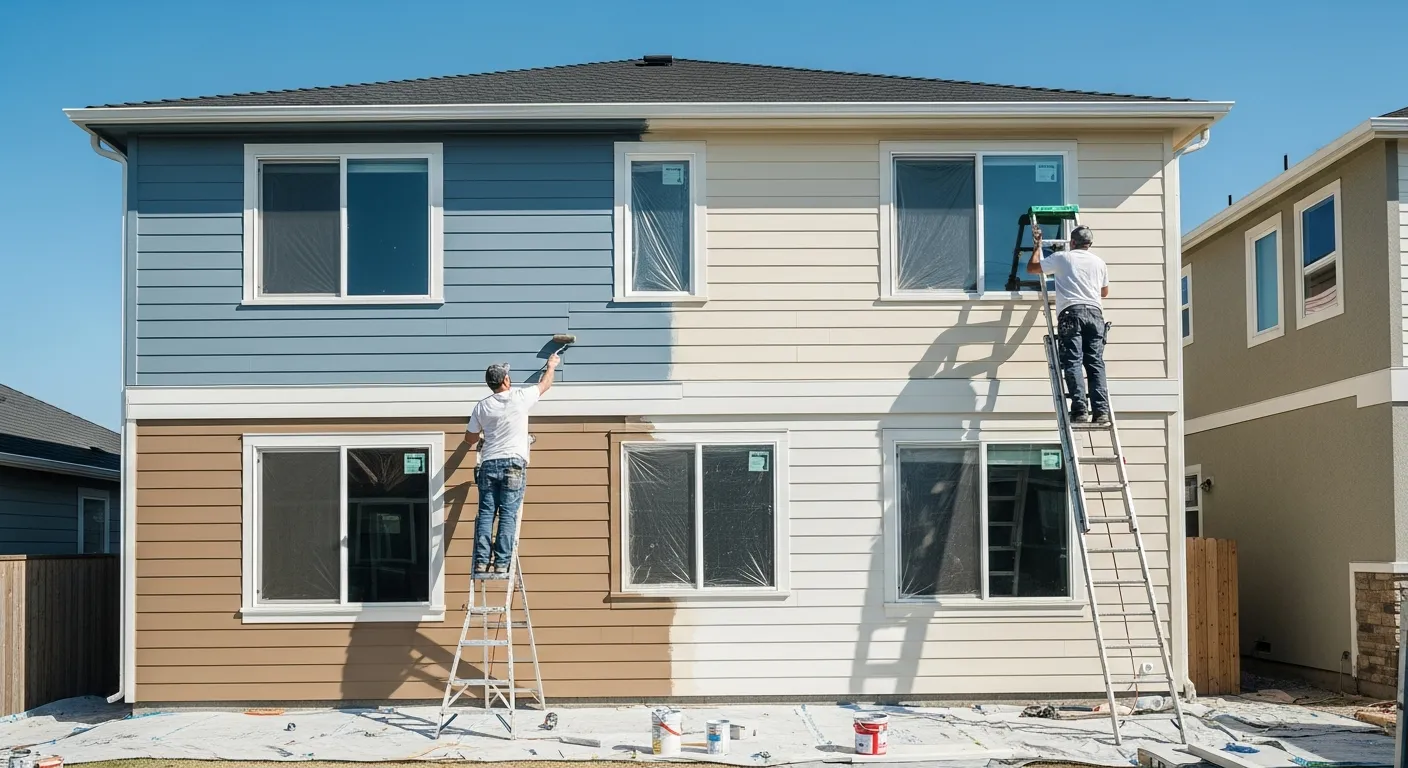
Painting is won at the estimate and locked with a deposit
Painting runs on a clear sequence, and every step is a place a contractor can win or lose a job. A homeowner decides to repaint the interior, refresh the exterior, or redo the cabinets, and they call a few painters to compare. Nobody quotes a paint job over the phone — the number comes after a walkthrough — so the phone call's job is to book that estimate. The contractor who answers, gathers the project details, and gets the walkthrough on the calendar first has the edge, because a prompt, professional first contact is what a homeowner reads as a professional, reliable company they'd trust in their home for several days.
Then comes the part that separates a booked calendar from a hopeful one: the deposit. Painting jobs are multi-day, material-heavy, and scheduled ahead, which creates room for a customer to keep shopping, take a lower bid, and cancel — leaving a crew idle on a day that was supposed to be booked. A deposit turns a soft yes into a committed job and covers the paint you've already bought. Layer on top of that the trade's strong seasonality — exterior work concentrates into the warm, dry months and every painter gets slammed at once — and the pattern is clear. As of July 2026, the painting contractors who fill their season are the ones whose phone is answered every time, whose estimates get booked on the call, and whose jobs get locked with deposits.
This guide covers the full automation stack for a painting contractor: 24/7 bilingual answering, estimate booking, deposit-locked multi-day scheduling, seasonal capacity, crew coordination, payments and QuickBooks, reviews, and ad attribution. It maps to the Run with Jarvis platform.
Layer 1: 24/7 bilingual answering that survives the exterior rush
The foundation is KeyBot, the AI phone agent that answers on the first ring, day and night, in English or Spanish. For a painting contractor, two properties matter most.
It's always on. Painting is often a considered home-improvement decision people make on their own time — evenings, weekends, the moment after a homeowner finishes browsing color ideas and decides to actually call. And when a painter is up on a ladder cutting a clean line along a ceiling, he can't stop to answer. An AI that answers instantly at any hour captures the estimate requests a voicemail box loses, and in a multi-bid comparison, the first responder anchors the decision. The after-hours economics are in the after-hours calls playbook, and why response speed wins the comparison is in the speed-to-lead guide.
It answers in parallel. The warm-season exterior rush hits every painter at once. During peak, the phone stacks up faster than one person can gather intake, and the callers who get a busy signal simply book a walkthrough with the painter who answered. The AI answers every caller simultaneously, captures each project, and books each estimate — so your peak season fills instead of leaking. That surge capacity is the whole subject of seasonal call volume management, and the safety net for any call that still slips is missed-call text-back.
The bilingual capability is essential in painting. The trade serves a broad customer base and is heavily staffed by Spanish-speaking crews, and an English-only line loses a real share of both estimate requests and crew coordination. The AI handles the whole call — booking, deposit follow-up, callback — in whichever language the caller prefers. See bilingual Spanish answering. And if you're weighing this against a live call center, AI vs. human answering service explains why an agent that runs a real intake and books beats one that just takes a message.
Layer 2: Estimate booking with a real project intake
Because painting is quoted after a walkthrough, the phone call's whole job is to book that walkthrough with an intake complete enough that your estimator arrives prepared. A well-scoped intake makes the estimate faster and the bid sharper; a thin one means the estimator shows up blind and quotes on the fly. This structured gathering is exactly what an AI does consistently, even during a rush when a distracted human would cut it short.
The AI's intake on a painting call captures what your estimator needs: interior or exterior, the scope (which rooms, how many, whole house, just cabinets, siding and trim), the surfaces and details that drive labor (ceilings, trim, doors, high work, decks and fences), the prep and repair reality (peeling paint, drywall patches, wood rot, pressure washing), whether it's a color change or a refresh, and whether the home will be occupied or vacant during the work. Then it books the on-site estimate through GetTimePad with all of it attached.
That intake shortens the sales cycle and sharpens the bid — your estimator isn't calling back to ask about the deck or the drywall damage. The booking mechanics are in how AI appointment booking works, and the case for booking the walkthrough on the call instead of trading voicemails is in online booking vs. phone calls. Because estimates are scheduled visits, reminders keep them from becoming no-shows — the mechanics are in reduce no-shows with appointment reminders.
Layer 3: Deposits and multi-day job scheduling
A painting job is a multi-day commitment scheduled ahead of time, and that gap between the signed estimate and the start date is where jobs slip away. A customer with no money down is still shopping; a customer who's paid a deposit is committed and has helped cover the materials you've already ordered. IntelliDrive's POS and payment links let you send a deposit request the customer pays from their phone the moment they accept the bid, converting a soft yes into a locked job. The payment-link mechanics are in get paid faster with payment links.
The scheduling side is just as important. A three-day exterior repaint isn't a single slot — it's a block of crew-days that has to fit the calendar without colliding with the next booking. Because the calendar in GetTimePad holds those multi-day blocks and IntelliDrive's CRM tracks each project's status, you can schedule a full season of overlapping multi-day jobs without double-committing a crew or leaving a gap between projects. That capacity planning is what lets a painting contractor pack a busy season tight instead of either turning away work or overbooking a crew that can't be in two places. The seasonal side of it is in seasonal call volume management.
Layer 4: CRM, crews, and job coordination
Once jobs are booked, the operation runs on getting the right crew, the right paint, and the right equipment to the right address for the right number of days. IntelliDrive provides the CRM, GPS crew tracking, and routing to coordinate crews across jobs, know where a team actually is, and give a customer an accurate start-time window on the morning their project begins.
That coordination matters more in painting than in a quick-hit trade because a customer is living around your crew for days — furniture moved, rooms off-limits, cars out of the driveway. Clear communication and reliable scheduling are a big part of what earns the review and the referral. When a customer calls to check on timing or a crew change, your office answers from the live picture instead of guessing. The multi-crew coordination mechanics are in CRM and dispatch software for multi-tech service businesses, and the case for handling a bigger season without adding office staff is in scaling without hiring.
Layer 5: Staged payments and clean books
Painting money moves in stages — a deposit to lock the job and cover materials, sometimes a progress payment on a longer project, and the balance on completion once the customer walks the job and approves it. IntelliDrive's POS and payment links handle each stage against one job record: deposit up front, balance collected in the field when the last coat's dry and the customer signs off. That staged billing is why a painting contractor needs a real system — a multi-day, multi-payment job doesn't fit a shoebox of receipts.
Bidirectional QuickBooks sync keeps the accounting aligned across those stages without re-keying — details in the QuickBooks sync guide — and chargeback defense protects the substantial card payments a paint job generates, where a large final invoice occasionally turns into a dispute. Running the estimate, the deposit, the project, and the final balance through one CRM and POS means each job is a single record from first call to final approval.
Layer 6: Reviews to win the quality-conscious customer
Painting is a highly visible, quality-judged trade — the work is literally on display on every wall of the home — so customers vet painters carefully and lean hard on reviews and photos before choosing. A painting contractor with a strong, current review profile wins the homeowner comparing bids, because a small price difference doesn't outweigh the risk of sloppy lines and drips from a contractor with thin reviews. IntelliDrive automates review requests after a completed job, turning a crisp, clean paint job into the reviews that win the next quality-conscious customer.
On the Elite plan, that extends to AI-drafted review replies and Google Business Profile management, keeping the profile active and visual for a business people research through "house painters near me" and portfolio browsing. The full playbook is in get more customer reviews, and the local-search angle is in the Google Business Profile guide.
Layer 7: Attribution for painting ad spend
Painting contractors invest in Google Ads and Local Services Ads for high-value keywords, and lead-gen platforms sell painting leads at a premium. CallFlux, on the Pro plan, tells you which of that spend actually produced booked, deposited jobs. It uses Dynamic Number Insertion and gclid attribution to tie each call to its campaign and keyword, records and transcribes calls, and scores leads — so you can see which channels generate signed projects versus tire-kickers and dead leads. In a category where a booked job is worth thousands and a click isn't cheap, knowing your true cost per booked job is what makes the ad budget a growth engine instead of a guess. Details are in the call tracking and attribution guide, and the LSA specifics are in the Local Services Ads guide.
Mapping the plans to a painting contractor
Here's how the three Run with Jarvis tiers map to a painting contractor. Every plan includes zero setup fees, unlimited users, and month-to-month terms.
| Plan | Price | Call minutes | Best for the painting contractor that... | Key capabilities for painting |
|---|---|---|---|---|
| Core | $500/mo | 500 min ($0.45/min overage) | Needs 24/7 answering, estimate booking, and deposit-locked scheduling for the whole operation | 24/7 AI receptionist EN/ES, estimate intake + booking, deposit links, multi-day calendar, GPS crew coordination, CRM, POS + staged billing, QuickBooks sync, review automation, chargeback defense, AI follow-up, mobile app |
| Pro ⭐ | $750/mo | 1,000 min ($0.40/min overage) | Runs Google/LSA ads or buys leads and wants to know what converts | Everything in Core plus call tracking & attribution (DNI, gclid, transcription, lead scoring, recording) |
| Elite | $1,200/mo | 2,500 min ($0.35/min overage) | Wants to actively grow and automate marketing | Everything in Pro plus AI growth: campaign builder, Google Business Profile management, AI review replies, LSA lead management, and the Jarvis AI Assistant |
The exterior season can spike a painting contractor's call volume for months, and estimate calls run long, so the higher minute allotments on Pro and Elite frequently matter as much as the added features when the weather turns. The plan-selection guide helps you match minutes to your seasonal call pattern, and what AI operations actually cost compares it to staffing a seasonal phone.
The seasonal-staffing math
The old way to handle the painting season is to staff for it — add phone help for the warm-weather rush, then carry the cost through a slow winter or churn through hiring every spring. It's expensive and awkward, and even a staffed phone gives busy signals when peak-hour estimate calls stack up faster than a person can gather intake.
An AI receptionist erases that trade-off. It answers one estimate call or fifteen for the same flat monthly rate, runs a complete project intake on each, and never needs seasonal hiring or training. For a business whose revenue concentrates into the painting months, always-on parallel answering that captures the whole seasonal surge is the highest-leverage investment on the board — you fill the season without carrying an off-season phone room. The always-on-employee case is in what is an AI employee for service businesses.
Outbound follow-up: estimates that need a nudge to close
Painting has a competitive, multi-bid sales cycle, so a large share of estimates sit unanswered while the customer compares. Every plan includes AI outbound follow-up (not cold sales) built for that. It confirms scheduled estimates and job start dates, follows up on quotes the customer hasn't acted on, and nudges soft acceptances toward a deposit before they drift to a lower bid. It can also re-engage past customers — a homeowner whose interior you painted last year is a warm lead for the exterior this season. For a painting contractor, disciplined follow-up on open estimates is often what turns a middling close rate into a full season. The mechanics are in AI outbound follow-up.
The metrics that tell you it's working
Once the stack is live, watch a few numbers. Start with estimate-booking rate — the share of inbound calls that turn into a scheduled walkthrough. Because the AI books on the call instead of promising a callback, this should climb, and every booked estimate is a shot at a multi-thousand-dollar job.
Track seasonal capture: during the exterior rush, how many simultaneous calls got answered and booked versus lost to voicemail. In peak months, that number is a big share of your annual revenue. Pair it with after-hours estimate requests captured, the evening and weekend calls a voicemail box used to drop.
Watch estimate-to-job close rate and deposit conversion rate — how many walkthroughs turn into signed, deposited jobs — which follow-up and easy payment links should lift, and which directly protect your booked calendar from cancellations. Track no-show rate on estimates, which reminders should lower. On the Pro plan, watch cost per booked job by channel so CallFlux attribution shows which ads and lead sources actually produce signed projects. The full ROI framework is in the AI receptionist ROI guide.
Anatomy of a painting estimate call, start to finish
Trace the call that books a week of work. It's a Saturday morning in May. A homeowner has decided the sun-faded exterior finally needs repainting before summer, plus the trim and the front door. They search "exterior house painters near me" and start calling to line up estimates — but it's the weekend, and the first two painters they dial ring to voicemail.
Your AI answers on the first ring. It runs a clean intake: two-story exterior, lap siding with some peeling on the south side, trim and a front door, a color change from beige to gray, some wood rot around a window that'll need repair, home occupied during the work. It books an estimate for Tuesday afternoon with all of that attached, confirms the callback number, and sends a reminder so the walkthrough sticks. When your estimator arrives Tuesday, they already know about the peeling, the rot, and the color change, and can quote a sharp, credible number on the spot.
The painters whose lines went to voicemail that Saturday are a step behind — by the time they call back, this homeowner has already booked a walkthrough with the company that answered and sounded prepared. In painting, the first professional response anchors the comparison, and the completeness of the intake decides how sharp and credible your bid is. The intake logic is in how AI appointment booking works; the seasonal economics are in seasonal call volume management.
What painting contractors ask before switching
"Can an AI really scope a paint job?" It doesn't quote — no serious painter prices a job without a walkthrough. Its job is to book the estimate with a complete, structured intake so your estimator arrives already knowing the surfaces, the prep, and the color change. It nails the handoff, which shortens the sale.
"What happens during the exterior season?" That's the core reason to switch. The AI answers in parallel, so a wall of peak-season estimate calls all get intake-ready and booked instead of one held and the rest lost to voicemail — without hiring a seasonal phone. See seasonal call volume management.
"Can it protect me from cancellations on booked jobs?" It helps two ways: deposit links that lock the job with money down and cover materials, and automated follow-up that nudges soft acceptances toward commitment. See get paid faster with payment links.
"Will it lose me my Spanish-speaking customers?" The opposite — it handles the whole call in Spanish, which for a trade serving a broad customer base and staffed heavily by Spanish-speaking crews is a real share of jobs an English-only line would fumble. See bilingual Spanish answering.
Building the stack in order
A practical rollout for a painting contractor:
- Turn on 24/7 parallel AI answering first. This ends the peak-season busy signals and after-hours voicemail misses — the two biggest leaks during the months that matter. Get KeyBot answering EN/ES around the clock.
- Wire estimate intake and booking so every call lands a well-scoped walkthrough.
- Add deposit links and multi-day scheduling so jobs get locked and the season doesn't overbook.
- Turn on crew coordination so multi-day projects stay on track.
- Run estimates, deposits, and balances through one CRM/POS with QuickBooks sync.
- Automate reviews to win the quality-conscious customers.
- Add attribution (Pro) to see which ads and lead sources produce signed jobs.
The strength of one platform for a painting contractor is that the estimate you book, the deposit that locks the job, the multi-day project you schedule, and the final balance you collect on approval all live in one system — no re-keying between a phone service, a scheduler, and an accounting app while the season's estimate calls keep coming. The case for one stack over stitched-together tools is in all-in-one vs. point solutions.
See the tiers against your own call volume at /pricing, or get in touch to plan a rollout before your next painting season.