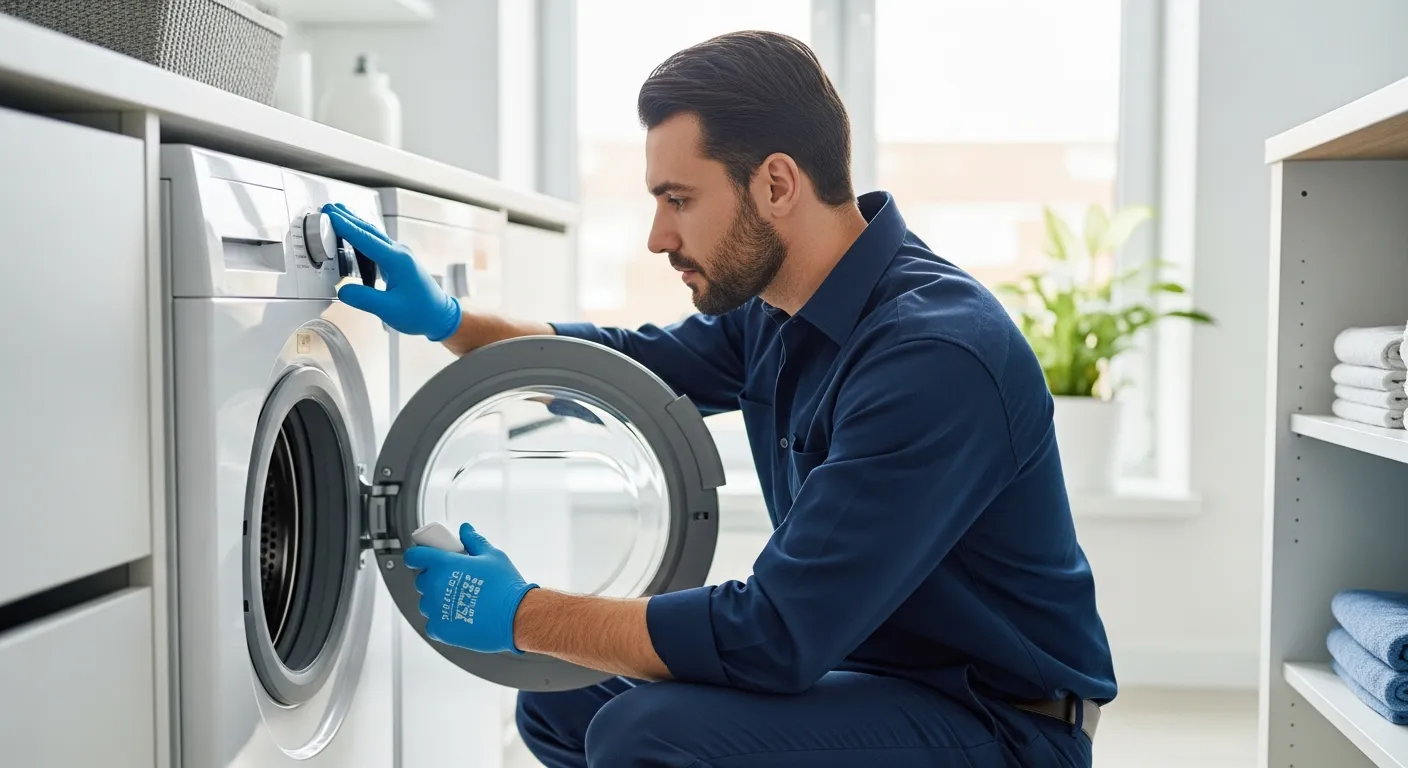
Appliance repair is a volume game — and the phone is the bottleneck
An appliance repair shop does not lose sleep over one big job. It lives on volume: a steady stream of refrigerators that stopped cooling, washers that will not drain, ovens that will not heat, and dryers that scream. Each call is a modest ticket, but a busy shop fields dozens a day. And that is exactly where the trouble starts.
As of July 2026, the constraint on most appliance repair businesses is not demand — it is the ability to answer the phone during the hours when everyone calls at once. The front desk gets three calls stacked up at 9 a.m., sends two to voicemail, and by the time anyone calls back, one customer has already booked with a competitor and the other has forgotten which shop they even dialed. Multiply that by every busy morning and the leak is enormous.
This guide covers how appliance repair automation handles high call volume, captures the diagnostic fee cleanly, manages brand and warranty intake, books tight scheduling windows, reduces no-shows, and dispatches a multi-tech crew — without adding front-desk headcount. The same automation logic shows up across trades; see the plumbing automation stack and the HVAC answering service stack for adjacent playbooks.
Why appliance repair calls slip away
Three things about appliance repair make lead capture uniquely hard:
- Peak-hour pile-ups. Customers call when they discover the problem — usually in the morning when the fridge is warm or after work when the dryer quits. Your calls arrive in bursts, not evenly, so a one- or two-person office is guaranteed to miss some.
- Every call is a small, perishable lead. A $95 diagnostic that turns into a $280 repair is good money, but no single call feels big enough to chase down aggressively. So missed calls quietly accumulate instead of setting off alarms.
- Price and fee confusion causes drop-off. Customers who do not understand the diagnostic fee cancel at the door or dispute the charge. A clean explanation on the first call prevents both.
The Bureau of Labor Statistics tracks steady, ongoing demand for appliance and home-equipment repair work — the market is there. The gap is operational: answering the volume, qualifying it, and booking it before it goes cold. Our breakdown of the real ROI of an AI receptionist frames why capture, not lead-gen, is where the money hides.
The five systems that automate an appliance repair shop
Run with Jarvis is one platform made of five components. For appliance repair, each maps to a specific choke point.
- KeyBot — 24/7 bilingual (English/Spanish) AI call answering that never puts a caller in a voicemail queue, even when six calls hit at once.
- GetTimePad — online scheduling that books diagnostic visits into real, bookable arrival windows.
- IntelliDrive — CRM, POS, invoicing, payment links, parts inventory, and multi-tech dispatch, syncing to QuickBooks or Square.
- CallFlux — call tracking, ad-source attribution, recording and transcription, and ROI dashboards.
- Jarvis AI Brain — natural-language commands and autonomous workflows for parts follow-up, review requests, and revenue optimization.
Weighing this bundled model against stitching five separate apps together? The all-in-one versus point solutions comparison does the integration math.
Handling high call volume without dropping leads
The single biggest win for an appliance shop is that an AI answerer has no queue depth limit. When your morning rush hits, KeyBot answers every simultaneous caller at once. There is no hold music, no "all our representatives are busy," and no voicemail dead-end. Every caller gets a live, qualifying conversation.
That alone converts the calls you already pay to generate. For the overflow that any human system would drop, a missed-call text-back re-engages the caller instantly — the mechanic we detail in the missed-call text-back playbook. And because the answerer is bilingual by default, Spanish-speaking customers get the same clean intake, an advantage covered in the bilingual Spanish answering service guide.
The diagnostic-fee conversation, handled correctly
Appliance repair runs on the diagnostic (or service-call) fee model: the tech charges to come out and diagnose, and that fee typically applies toward the repair if the customer proceeds. This model is standard and fair — but only if it is explained before the truck rolls. Customers who first hear about the fee when the tech is standing in their kitchen feel ambushed, cancel on the spot, or dispute the charge later.
The intake conversation sets the expectation up front: it states your diagnostic fee, explains that it applies toward the repair, and confirms the customer agrees before booking. This does three things:
- Filters price-shoppers who were never going to pay for a visit, saving wasted truck rolls.
- Eliminates the at-the-door surprise that drives cancellations and chargebacks.
- Pre-qualifies serious jobs so your techs spend their day on customers who will proceed with repairs.
When the customer proceeds, IntelliDrive rolls the diagnostic into the final invoice and generates a payment link, syncing the whole transaction to QuickBooks or Square. No double entry, no fee that gets forgotten on the ticket.
Brand and warranty intake that protects your margin
Not every appliance failure should be billed the same way. A three-year-old refrigerator may still be under an extended warranty. A high-end range might have a manufacturer parts warranty that covers the sealed system. Missing that during intake either costs the customer money they should not pay or costs you margin on a job you should have routed differently.
The AI intake captures:
- Appliance type (refrigerator, washer, dryer, dishwasher, range, oven, microwave).
- Brand and, when the customer can find it, the model number off the data plate.
- Age or purchase timeframe to gauge warranty likelihood.
- Symptom in the customer's words ("it's leaking from the bottom," "it won't spin," "it's not getting cold").
That structured intake means warranty-eligible jobs get flagged and routed correctly, and your tech arrives already knowing whether they are looking at a Samsung ice-maker fault or a Whirlpool drain-pump job. Better intake means higher first-visit fix rates, which is the metric that actually drives appliance-shop profitability.
Scheduling windows and no-show reduction
Appliance repair does not book "at 2:00." It books "between 12 and 4." Arrival windows are the norm because diagnosis time varies. GetTimePad handles window-based scheduling natively, so the AI can offer a real, bookable window and hold it.
The no-show problem is acute in this trade: a customer forgets, leaves the house, and the tech arrives to a locked door — a completely wasted truck roll. Automated confirmations and reminders before the window, plus an on-the-way text when the tech is en route, keep the customer home and ready. Fewer missed connections means more completed jobs per tech per day. The full reminder cadence is in reducing no-shows with appointment reminders, and the booking handoff mechanics are in how AI appointment booking works.
Multi-tech dispatch by specialty and geography
A washer repair and a sealed-system refrigeration job are not interchangeable. Sending a generalist to a compressor fault means a callback; sending your refrigeration specialist to a simple dryer belt wastes your most skilled tech. And appliance shops often cover wide metro service areas where drive time eats the day.
IntelliDrive's dispatch board assigns jobs by two dimensions at once:
- Specialty — refrigeration and sealed-system work to the tech certified for it; general appliance jobs to the nearest generalist.
- Geography — clustering a tech's stops so they are not crossing the metro twice, which lifts jobs-per-day and shrinks fuel cost.
Because dispatch, CRM, and parts inventory sit in one system, the dispatcher can also see whether the tech's van carries the likely part before assigning. Our guide to CRM and dispatch software for multi-tech crews covers how the board scales as you add trucks.
Parts ordering and job-completion follow-up
A huge share of appliance repairs are two-visit jobs: diagnose on visit one, order the part, return to install on visit two. The gap between those visits is where customers go cold and jobs stall. Automation keeps the thread alive:
- The tech logs the required part in IntelliDrive after the diagnostic.
- The system tracks the part order against the customer's open job.
- When the part arrives, an automated follow-up re-engages the customer to book the return visit — instead of the ticket sitting in a pile hoping someone remembers.
That parts-loop follow-up is exactly the kind of autonomous workflow described in AI outbound follow-up for service businesses. It turns "we'll call you when the part's in" into a reliably closed second visit.
What it costs, and where the break-even sits
Here are the real 2026 numbers, tier by tier.
| Plan | Monthly | AI call minutes | Overage / min | What appliance shops get |
|---|---|---|---|---|
| Core | $500/mo | 500 | $0.45 | KeyBot 24/7 bilingual answering, GetTimePad window scheduling, SMS, plus IntelliDrive: CRM/POS, invoicing, payment links, parts inventory, multi-tech dispatch, QuickBooks/Square |
| Pro | $750/mo | 1,000 | $0.40 | Adds CallFlux: call tracking, ad attribution, recording/transcription, ROI dashboards |
| Elite | $1,200/mo | 2,500 | $0.35 | Adds AI marketing and the Jarvis AI Brain: AI campaign builder, natural-language commands, autonomous workflows, revenue optimization |
No setup fees, no per-call fees, and no long-term contract — every plan is month-to-month with unlimited users, and overage runs at a published per-minute rate that gets cheaper as you move up the tiers.
Now the volume math that makes appliance repair a strong fit. Take Pro at $750/mo with 1,000 minutes — the right tier for a busy, ad-spending shop. Appliance intake calls are short and structured, typically around four minutes. That is roughly 250 calls per month within the plan, at a fully loaded cost near $3.00 per answered call ($750 ÷ 1,000 × 4). Against a diagnostic fee that commonly sits around $95 and a repair ticket that lands in the $200–$350 range, the break-even is tiny: covering the plan takes only about $750 ÷ $250, or three completed repairs a month. A high-volume shop clears that before the first Monday rush is over, and past the included minutes, overage is just $0.40/min. For the per-minute logic across every tier, see what AI operations actually cost in 2026.
Attribution: which channels actually book repairs
Appliance shops advertise across Google, Local Services Ads, and referral networks, and they rarely know which channel produced a booked, completed job versus a price-shopper who never proceeded. CallFlux tracks each call to its source, records and transcribes the conversation, and reports it on an ROI dashboard.
You learn that your "refrigerator not cooling" campaign booked eighteen diagnostics last month at a high proceed-to-repair rate, while a broad "appliance repair" campaign mostly drew warranty-question calls that never converted. Then you move budget toward what pays. The full method is in the call tracking and attribution guide.
Reviews: the compounding asset for a repair shop
A customer whose fridge you saved before the groceries spoiled is glad — briefly. Capture that gratitude with an automated review request texted on job completion, and you build the Google profile that ranks you for "appliance repair near me." For a volume business, review velocity compounds fast: dozens of jobs a week means dozens of review opportunities, and consistent follow-up turns that into a review lead over competitors who ask sporadically. The workflow is covered in getting more customer reviews.
A morning in an automated appliance shop
- 8:05 a.m. — Three calls land at once: a warm fridge, a washer that won't drain, and a warranty question. KeyBot answers all three simultaneously, no queue.
- 8:06 a.m. — The fridge caller gets the diagnostic fee explained, agrees, and books a 12–4 window. Brand and model captured; flagged as possible sealed-system.
- 8:09 a.m. — The warranty caller's five-year-old range is flagged as likely out of warranty; the AI books a standard diagnostic instead of wasting a manufacturer-claim path.
- 8:20 a.m. — A Spanish-speaking customer with a broken dryer gets full intake in Spanish and an afternoon window.
- 9:00 a.m. — IntelliDrive routes the fridge job to the refrigeration specialist and clusters the washer and dryer jobs to a nearby generalist to cut drive time.
- 1:30 p.m. — The washer job needs a drain pump. The tech logs the part; the system tracks the order and will re-engage the customer to book the return visit when it arrives.
- 5:00 p.m. — Completed jobs trigger review-request texts. Two five-star reviews post before dinner.
No front-desk pile-up. No lead cold by lunch. The owner ran the crew, not the phones.
Choosing your starting plan
A high-volume appliance shop can start on Core ($500/mo), because IntelliDrive's dispatch, parts inventory, and invoicing — the machinery of the two-visit repair workflow — are included from the first tier. Shops spending on ads should move to Pro ($750/mo) for CallFlux attribution and the extra included minutes, and operations wanting AI marketing plus autonomous parts-loop and revenue workflows land on Elite ($1,200/mo).
Not sure which tier your minute volume needs? Work through how to choose an AI receptionist plan, and compare AI versus human answering services to see why unlimited-concurrency AI beats a per-call human service for a volume trade.
Where appliance repair shops get automation wrong
Automation fails appliance shops in predictable ways. Avoid these and the payoff is fast:
Letting the AI take messages instead of booking. A message queue at 9 a.m. defeats the purpose. The volume advantage only materializes if every simultaneous caller gets booked into a window on the call, with the diagnostic fee already explained and agreed.
Not scripting the diagnostic-fee explanation. If the fee is not set clearly on the first call, you are back to at-the-door surprises, cancellations, and disputes. Make the fee explanation a required step in intake so every booked visit is a customer who already said yes to paying for the diagnosis.
Under-capturing warranty status. Skipping the age-and-brand questions means warranty-eligible jobs get billed wrong and non-warranty jobs get sent down a claims path that wastes time. A few intake questions protect margin on both sides.
Neglecting the parts-loop follow-up. The second visit is where appliance revenue leaks. If part arrivals do not trigger an automated re-engagement, tickets stall and customers drift to another shop. Wire the parts follow-up so every diagnosed job closes.
The winning pattern for a volume trade is: answer all concurrent callers, qualify with fee and warranty up front, book tight windows, dispatch by specialty, and never let a parts-pending job go quiet. The AI outbound follow-up guide covers that closing discipline in depth.
Scaling a multi-tech appliance operation
Appliance repair scales differently than a high-ticket trade because the constraint is throughput, not deal size. More completed jobs per tech per day is the whole game, and automation attacks that at every step.
A small shop with one or two techs feels the peak-hour phone problem first. Core solves the missed-morning-rush leak and gives you invoicing and parts tracking so the two-visit workflow stops stalling.
A mid-size shop running four to eight techs across a metro lives or dies on routing. Sending the refrigeration specialist across town twice, or dispatching a generalist to a sealed-system job they cannot fix, quietly destroys margin. IntelliDrive's specialty-plus-geography dispatch clusters the day intelligently, and CallFlux at the Pro tier tells you which campaigns actually feed booked, completed repairs versus warranty tire-kickers — so you stop paying to attract calls that never convert.
A large operation with a dozen-plus techs benefits most from Elite. The Jarvis AI Brain's autonomous workflows keep the parts-loop and review-request cadence running without anyone remembering to send them, revenue optimization surfaces where your proceed-to-repair rate is soft, and natural-language commands let a manager ask for today's completed-job count or the open parts-pending list in plain English. The platform absorbs the coordination load that would otherwise require a dispatch team, letting the shop add trucks without adding office overhead. See CRM and dispatch software for multi-tech crews for how that board holds up at scale.
The bottom line
Appliance repair is won at the front desk, and the front desk is where high-volume shops leak the most. Automation answers every simultaneous caller, explains the diagnostic fee cleanly so jobs stick, captures brand and warranty details that protect margin, books tight arrival windows, reduces the no-shows that waste truck rolls, dispatches by specialty and geography, and closes the parts-loop second visit that so often stalls.
At Pro's roughly $3.00 per answered call, capturing three extra completed repairs a month covers the plan — a trivial bar for a shop fielding dozens of calls a day. Everything past that is throughput you were already advertising for and simply could not answer. See what an AI employee does for service businesses, or explore the KeyBot answerer, GetTimePad scheduler, and IntelliDrive dispatch at thekeybot.com and intellidriveos.com.
Related reading
- Plumbing Business Automation Stack 2026
- HVAC Answering Service & Automation Stack
- CRM & Dispatch Software for Multi-Tech Service Businesses
- Reduce No-Shows With Appointment Reminders
- What AI Operations Actually Cost in 2026
Ready to stop losing morning-rush calls to voicemail? Compare tiers on the pricing page and book a demo to see the appliance repair workflow end to end.